Security teams buy tools. Developers decide whether those tools succeed. That may sound unfair, but it reflects how application security works in practice.
A platform can have excellent detection capabilities, extensive coverage, and impressive reports. If developers see it as an obstacle rather than a useful part of their workflow, adoption becomes difficult. Findings remain unresolved, alerts get ignored, and security teams end up chasing people instead of fixing problems.
This reality has changed how many organizations evaluate security platforms. A few years ago, conversations focused heavily on detection rates and scanning coverage. Those factors still matter, but another question has become equally important:
Will developers actually use it? The best developer-friendly security platforms tend to share a few characteristics. They integrate naturally into existing workflows, provide actionable findings instead of endless noise, and help engineers fix problems without forcing them to become security specialists.
For teams looking for Snyk alternatives, the platforms below are among the most frequently considered alternatives.
What Developers Usually Want From Security Tools
Ask a developer what makes a security platform frustrating, and the answers are often surprisingly consistent. The complaints rarely focus on scanning technology.
Instead, developers talk about interruptions, false positives, confusing remediation guidance, duplicate findings, and alerts that appear disconnected from real-world risk.
Platforms that gain traction among engineering teams often succeed because they reduce those frustrations.
Common priorities include:
- Clear remediation guidance
- Low false-positive rates
- Fast feedback loops
- Native developer workflows
- Minimal context switching
- Actionable findings
- Reasonable alert volume
- Strong CI/CD integration
With those priorities in mind, these are some of the platforms frequently evaluated by developer-focused organizations.
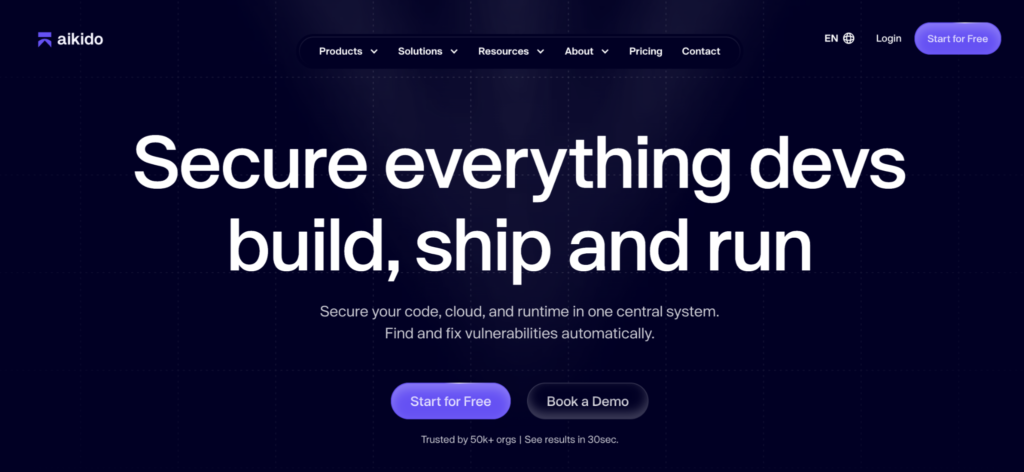
1. Aikido
Most developers do not wake up hoping to spend more time reviewing security alerts. They want to ship code. Security becomes easier to support when the platform respects that reality.
Aikido has gained attention partly because it focuses heavily on reducing the amount of security noise developers encounter. Rather than presenting every finding as equally important, the platform prioritizes vulnerabilities based on actual exposure and risk.
The goal is not simply to detect issues. The goal is to help developers understand which issues deserve attention first.
The platform combines multiple security categories inside a single environment, including SAST, SCA, cloud security, secrets detection, malware scanning, container security, runtime protection, AI-powered pentesting, and supply chain security. AutoFix functionality also helps automate remediation by generating pull requests for many common issues.
Capabilities include:
- SAST
- SCA
- Secrets scanning
- Cloud security
- Container security
- Runtime protection
- AI pentesting
- AutoFix remediation
- SBOM generation
- Supply chain protection
For teams looking to reduce both tool sprawl and alert fatigue, Aikido is often one of the first platforms considered.
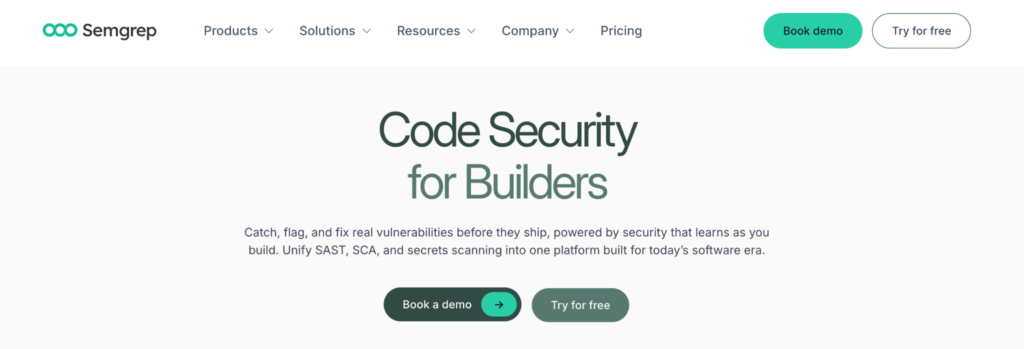
2. Semgrep
Few security platforms have earned as much goodwill among developers as Semgrep. Part of that reputation comes from flexibility.
Engineering teams often appreciate the ability to write custom rules, adapt scans to their environment, and integrate security testing without dramatically changing existing workflows.
The platform feels less like an external security layer and more like an extension of the development process.
Capabilities include:
- SAST
- Custom security rules
- Secrets detection
- Supply chain security
- CI/CD integration
- Developer-focused workflows
Organizations that prioritize engineering autonomy frequently place Semgrep near the top of their evaluation list.
3. GitHub Advanced Security
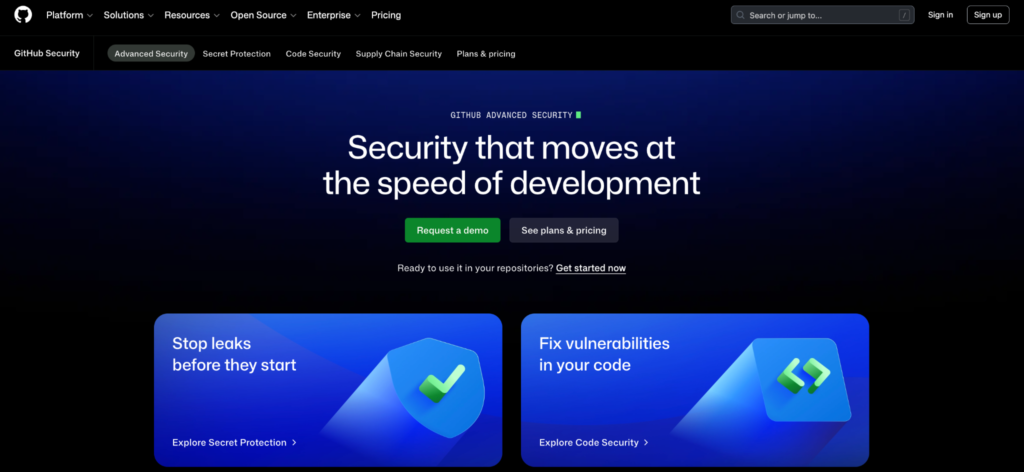
Developers already spend much of their day inside GitHub. That fact alone explains why GitHub Advanced Security continues gaining adoption.
Instead of introducing another interface, the platform brings security findings directly into repositories, pull requests, and workflows developers already understand. Security becomes part of the development process rather than something happening elsewhere.
For many engineering teams, that convenience matters. Capabilities include:
- Code scanning
- Secret scanning
- Dependency security
- Pull request integration
- Security campaigns
- Copilot Autofix
Organizations heavily invested in GitHub often view the platform as a natural extension of their existing environment.
4. SonarQube
Developers often discover SonarQube before they discover application security. Many teams initially adopt the platform because they care about code quality, maintainability, and technical debt. Security becomes part of a broader effort to improve engineering standards rather than a separate initiative.
That distinction matters. Developers generally respond better to tools that help them write better software overall rather than tools that appear focused exclusively on finding mistakes.
Capabilities include:
- Static analysis
- Security issue detection
- Code quality monitoring
- Technical debt tracking
- CI/CD integration
For organizations that want security and code quality working together, SonarQube remains a popular option.
5. Checkmarx
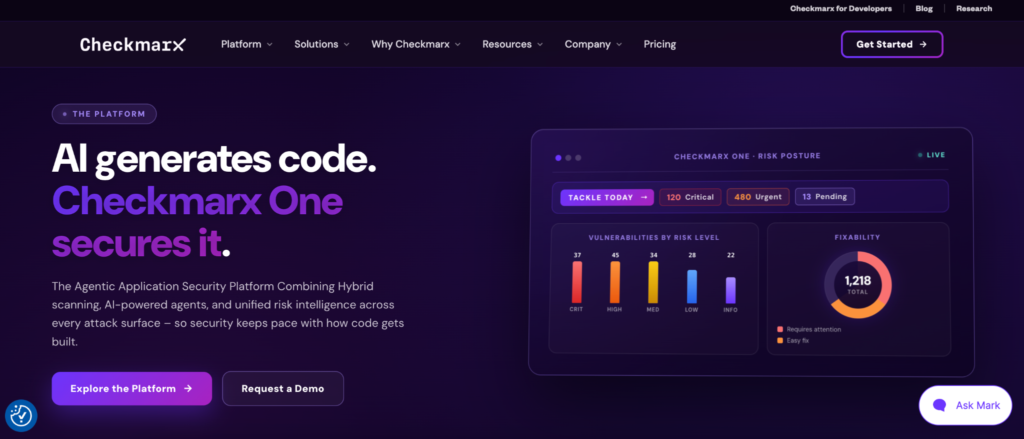
Developer-friendly does not necessarily mean lightweight. Large engineering organizations often need extensive security coverage while still maintaining reasonable developer experiences.
Checkmarx has spent years building capabilities that support enterprise-scale development environments without completely overwhelming engineering teams.
Capabilities include:
- SAST
- SCA
- API security
- IaC scanning
- Container security
- Supply chain security
For organizations balancing scale and usability, Checkmarx frequently appears in evaluations.
6. Mend.io
Open-source dependencies have become part of everyday software development. Most developers rely on them constantly.
The challenge is maintaining visibility into security risks without creating additional friction for engineering teams. Developers generally want clear guidance on what needs updating and why rather than lengthy reports filled with low-priority findings.
This is an area where Mend has built a strong reputation. Capabilities include:
- Software composition analysis
- Dependency management
- License compliance
- Vulnerability remediation
- Supply chain security
Teams with significant open-source exposure often include Mend in their shortlist.
7. Veracode
Some organizations need developer-friendly workflows. They also need governance, reporting, compliance support, and mature security processes. Veracode often enters conversations where both priorities exist simultaneously.
The platform has spent years serving organizations that require extensive security oversight while still supporting development teams responsible for remediation.
Capabilities include:
- SAST
- DAST
- SCA
- Penetration testing
- Compliance reporting
- Risk management
For larger organizations, balancing developer experience and governance requirements can make Veracode a compelling option.
Developers Care About Different Metrics
Security teams often focus on findings. Developers focus on effort.
A vulnerability that takes five minutes to fix feels very different from one that requires significant investigation, multiple approvals, and coordination across several teams. The technical severity may be identical, but the practical experience is not.
That difference helps explain why adoption varies so dramatically between platforms. Developer-friendly security tools tend to minimize friction wherever possible. They provide context, prioritize findings intelligently, and reduce the amount of work required to move from detection to remediation.
The Best Security Tool Is the One Developers Don’t Avoid
Most engineering teams have experienced security tools that technically worked but failed operationally. The findings were accurate. The workflows were painful. Over time, adoption declined because the platform created more work than developers believed it removed.
The strongest security platforms avoid that outcome by fitting naturally into existing development practices. Security becomes something developers can address during normal workflows rather than a separate process competing for attention.
That philosophy explains why platforms like Aikido, Semgrep, GitHub Advanced Security, SonarQube, Checkmarx, Mend.io, and Veracode continue appearing on shortlists. They all approach developer experience differently, but each recognizes the same reality: If developers do not use the platform, the platform will never deliver its full value.